
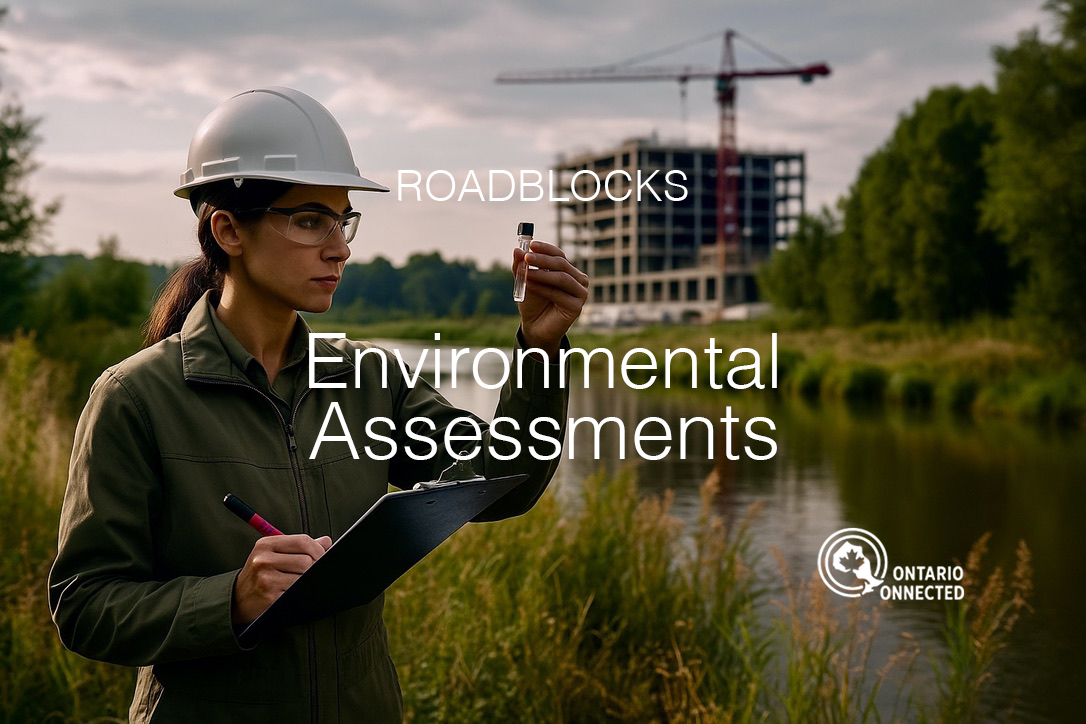
Environmental Assessments in Ontario: Delays That Hurt Us
When a community hears that a new hospital, housing development, or transit line has been approved, the excitement is real. It feels like progress. But for many Ontarians, that hope fades once they learn how long the next step will take: the environmental assessments in Ontario that often stretch for years before a single shovel hits the ground. What was supposed to protect the environment has slowly turned into a barrier that delays the very projects meant to improve lives.
In Scarborough, a mother watched the promise of a new transit line come and go through three different election cycles. Each time she heard officials say, “We’re initiating another environmental assessment,” her heart sank. She didn’t oppose protecting the environment. She simply wondered why it had to take so long. Why couldn’t Ontario protect nature and build the infrastructure her family desperately needed?
Why Environmental Assessments in Ontario Cause Long Delays
The intention behind environmental assessments is sound—ensure projects do not harm ecosystems, communities, or public health. But the reality is a system that has grown so slow, duplicated, and outdated that it routinely delays critical infrastructure.
- Endless re-studies. Even when previous studies already exist, new governments or agencies often restart assessments from scratch. Years of work get wiped out because requirements change midstream.
- Sequential approvals. Instead of running reviews at the same time, Ontario often performs them one after another. A transit corridor may wait for heritage review, then wildlife review, then noise review—each on its own timeline.
- Complex rules. Ontario’s EA system is one of the oldest and most complicated in Canada. Smaller countries build high-speed rail in less time than it takes Ontario to complete environmental paperwork.
According to the Auditor General, major environmental assessments in Ontario can take more than 5–8 years, even for projects with minimal ecological impact. In that time, costs rise, construction markets shift, and communities lose patience.
The Human Cost of These Delays
Environmental delays don’t just affect project budgets—they shape everyday life.
- A nurse in Brampton continues treating patients in a hospital so overcrowded that beds line the hallways, all because the new wing is still waiting for EA approvals.
- A struggling family in Hamilton watches rent rise while an affordable housing development sits trapped in environmental paperwork.
- A commuter in Durham spends two extra hours a day in traffic, knowing a transit line that could change everything is “awaiting assessment updates.”
Nobody wants to harm wetlands, lakes, forests, or wildlife. Ontarians cherish these things deeply. But they also wonder why protecting them means living with broken infrastructure for an entire decade.
Fixing Environmental Assessments in Ontario
Ontario can absolutely protect its ecosystems while speeding up the process. It simply requires modernizing a system that was built for the 1970s, not the realities of a province growing by a quarter-million people a year.
- Parallel reviews. Environmental, heritage, noise, and traffic assessments should happen at the same time—not stacked on top of each other.
- Standardized timelines. EA reviews should have clear deadlines. They should not continue until “completion.” They should continue until the deadline is reached.
- Reuse of existing data. Past studies should be valid unless scientific conditions have significantly changed. No more starting from scratch.
- Tiered assessments. Small projects should not face the same level of scrutiny as megaprojects. A bus depot should not take as long as a subway line.
These changes wouldn’t destroy environmental protection—they would finally make it effective. Ontario can protect wetlands and endangered species without sacrificing the needs of millions of people who rely on hospitals, housing, transit, and clean water.
A Future That Balances Nature and Progress
Ontarians care about the environment. But they also care about having a place to live, a way to get to work, and access to functioning hospitals. Right now, environmental assessments feel like a choice between nature and progress—when they should ensure both.
If Ontario modernizes its assessment system, we can build the future we’ve been promised without damaging the natural world we love. The goal isn’t to remove environmental assessments. It’s to make them smarter, faster, and more aligned with the needs of a modern province.
Explore Related Roadblocks
- Roadblocks: Bureaucracy
- Roadblocks: Political Turnover
- Roadblocks: Funding Uncertainty
- Roadblocks Series Hub
For provincial EA requirements and history, see Ontario’s Environmental Assessment documentation:
https://www.ontario.ca/page/environmental-assessments




Leave A Comment
You must be logged in to post a comment.