
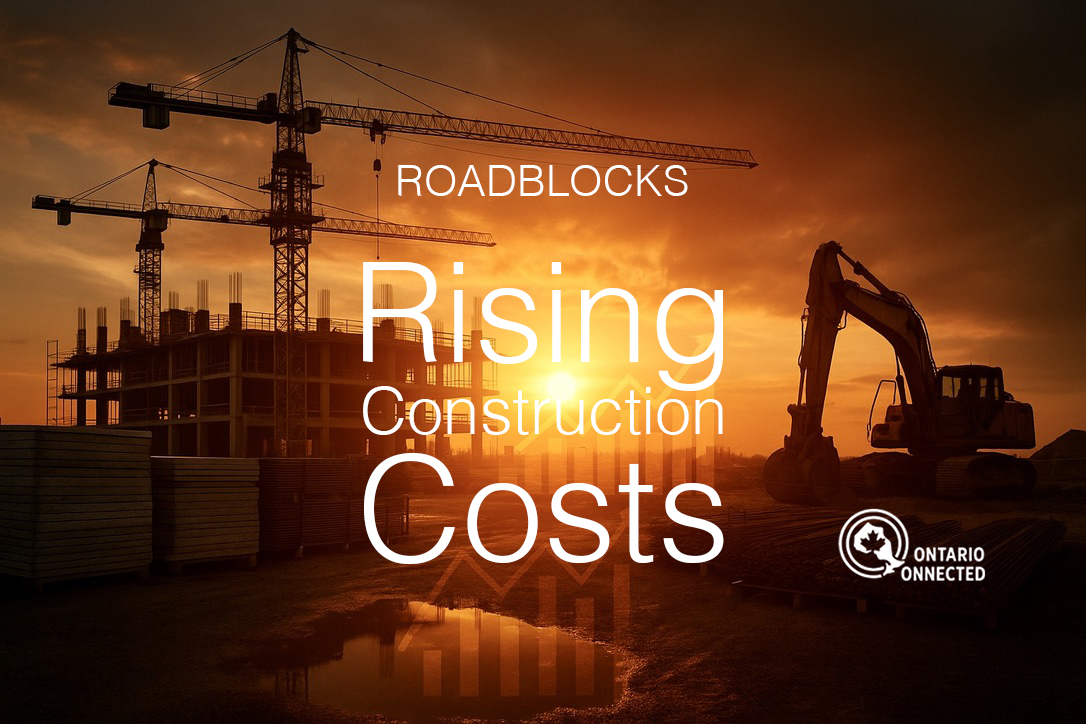
Rising Construction Costs: Why Budgets Collapse Before Shovels Hit the Ground
Rising construction costs are reshaping almost every major project in Ontario. Crews are ready, plans are approved, and communities are waiting — but as costs climb month after month, budgets fall behind faster than shovels can hit the ground. For many Ontarians, it feels like watching a house burn while everyone argues about who is responsible for turning on the hose.
In Etobicoke, a mother has been waiting years for the new school that was supposed to ease overcrowding. She remembers the announcement, the excitement, the renderings. But each year, as construction costs surge, tendering gets delayed again. Her son started Grade 1 when the project was unveiled. He might be in high school before that school opens.
This is the same pattern seen with other roadblocks in Ontario — from political turnover resetting timelines to supply chain disruptions driving unpredictability into every project phase.
What’s Driving These Escalating Costs?
Rising construction costs aren’t just accounting entries — they’re a compounding penalty for every month a project sits idle. Once a budget is set, every delay increases the risk that the numbers will be outdated by the time contracts are awarded.
- Material inflation: Steel, concrete, lumber and asphalt have all seen large price jumps. When a project must be retendered, the same scope often returns millions of dollars higher.
- Labour pressures: Ontario’s shortage of skilled trades pushes wages upward and stretches timelines.
- Global disruptions: Events worldwide — shipping delays, fuel spikes, geopolitical shocks — show up locally as higher costs and slower deliveries.
In multiple updates, Infrastructure Ontario has warned that inflation and market volatility are putting pressure on capital plans. The message is clear: the longer a project takes to move, the more vulnerable it becomes.
The Real-World Impact on Communities
For everyday Ontarians, these cost increases translate into delayed transit, crowded hospitals and housing shortages.
- Transit delays: When bids blow past the budget, projects are sent back to redesign — sometimes for years.
- Hospital bottlenecks: Renovations and expansions stall, leaving patients and staff struggling in overcrowded spaces.
- Housing shortages: Affordable units become “financially unviable,” leaving families priced out.
It’s a chain reaction: each reset adds months, each month adds millions, and each million pushes another project toward limbo.
The Human Consequences We Don’t Talk About
Behind every delayed project is someone paying the price. A senior waiting for long-term care hears that “cost escalations” are to blame — but that doesn’t shorten her stay in a hospital ward. A construction worker watches another site go on hold because pricing came in too high. A young couple delays moving because the affordable units planned for their area were shelved.
These aren’t abstract numbers — they’re lived realities. The same pattern shows up across other roadblocks documented in our Roadblocks Series Hub, where a single delay often creates ripple effects across entire communities.
How Ontario Can Fight Back Against Cost Escalation
Rising costs aren’t unbeatable. With the right tools, Ontario can build smarter and faster.
- Faster procurement: Shortening tender timelines reduces exposure to sudden price spikes.
- Standardized designs: Reusing proven templates — for clinics, schools, stations — cuts time and risk.
- Multi-year supply agreements: Locking in material prices lowers volatility.
- Early contractor involvement: Builders help shape realistic budgets before it’s too late.
According to Statistics Canada, non-residential construction price indexes have surged dramatically in recent years. Aligning decision-making speed with these realities is essential.
Moving Forward Despite Rising Construction Costs
Ontarians don’t expect perfection — they expect progress. They want to see cranes in the sky, crews working and projects delivered within a reasonable timeframe. Rising construction costs may be a challenge, but they’re not an excuse to abandon the transit, housing and hospital investments the province desperately needs.
Ontario can’t build tomorrow’s infrastructure with yesterday’s pace. The longer decision-making lags behind reality, the more expensive everything becomes — and the more Ontarians pay in both dollars and time.





Leave A Comment
You must be logged in to post a comment.