
Ontario AI Burden: We Ended the Carbon Tax and Walked Into Something Worse
For years, Ontario debated the carbon tax. It shaped elections, divided neighbours, and pushed families into constant arguments about costs. Then the policy faded, and the province expected a sense of relief. Instead, something heavier took its place. A new pressure arrived quietly, without votes or headlines. Today, that pressure is known as the Ontario AI Burden.
The Silent Rise of the Ontario AI Burden

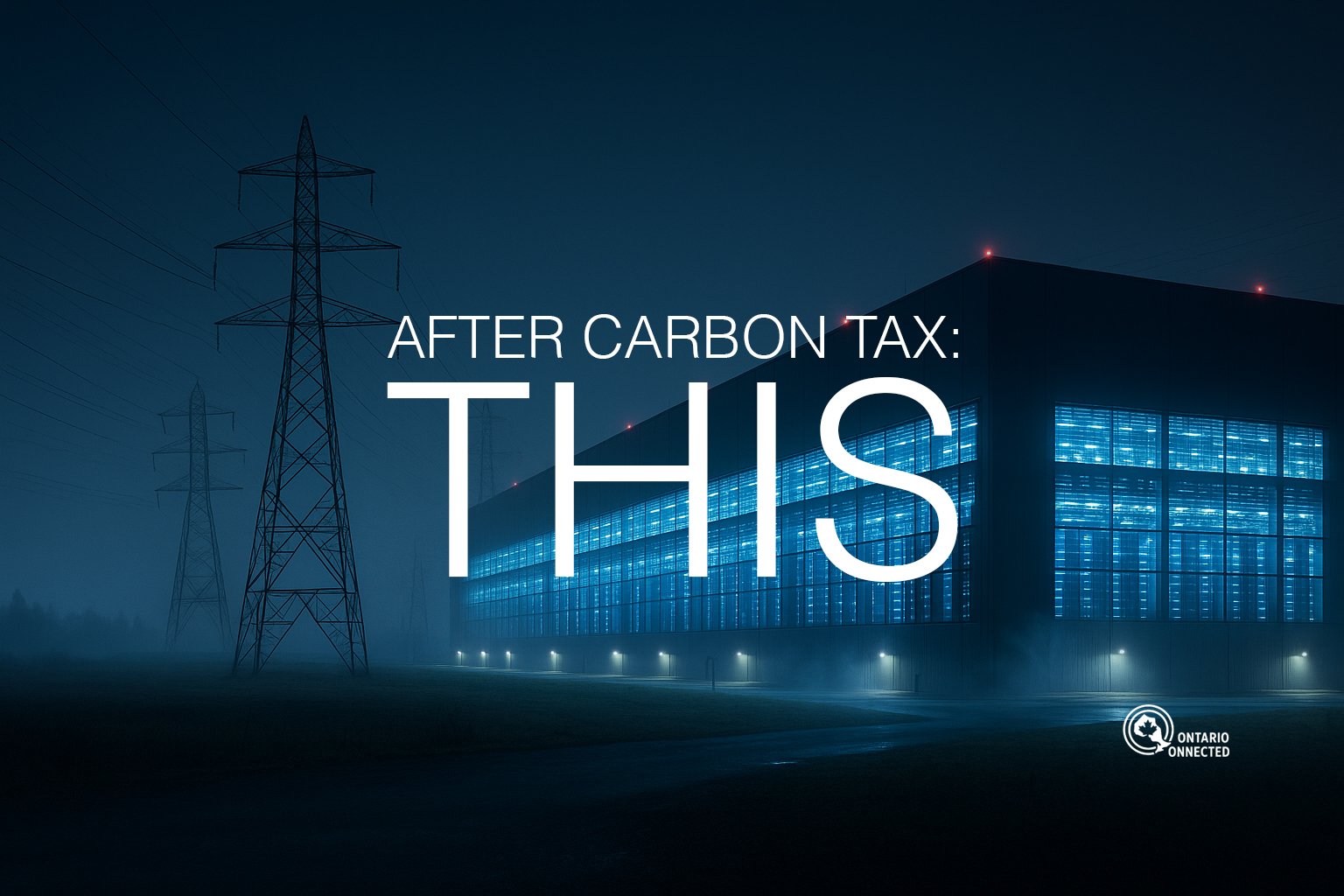
While Ontario argued about fuel surcharges, a different force reshaped the province. Massive AI data centres began appearing across key regions. They are not simple server rooms. These are industrial complexes—digital factories—that run day and night. They consume enormous amounts of electricity and pull huge volumes of water for cooling. As a result, the Ontario AI Burden grew long before most people noticed.
Energy demand rose steadily. Water systems felt new stress. Municipal budgets quietly absorbed more infrastructure costs. None of these pressures appeared on a receipt or rebate statement. They arrived through slow increases in hydro bills, local taxes, and environmental strain. The shift happened in the background, but the impact has already become visible across the province.
The Deal That Accelerated the Ontario AI Burden
The burden increased even faster after Mark Carney’s recent visit to the United Arab Emirates. That meeting opened the door to tens of billions in foreign investment tied directly to AI growth. Investors saw Ontario as an ideal location for new facilities. The climate is cold. The power grid is stable. The freshwater supply looks abundant. Because of this, foreign capital moved quickly and aggressively.
However, Ontario communities were never asked whether they wanted to host this new infrastructure. Workers were not invited into discussions about long-term job prospects. Municipalities had little time to plan for the energy and water demands. In effect, the Ontario AI Burden advanced without public consultation or provincial debate.
The Real Costs Hidden Inside the Ontario AI Burden
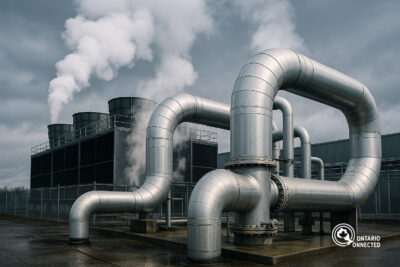
Cooling infrastructure at a data centre releases water vapour into the winter air, highlighting the water-intensive side of the Ontario AI Burden.
Many people believe AI operates in a weightless digital cloud. In reality, AI runs inside giant buildings filled with servers that generate intense heat. Those servers require constant electricity to stay cool and operational. When renewable sources fall short, gas plants must bridge the gap. As a result, emissions increase even when households try to reduce their own carbon footprint. This is a major part of the Ontario AI Burden.
Water adds another layer. Many data centres use evaporative cooling systems that pull millions of litres from municipal sources. Unlike industrial cooling towers of the past, these systems often release the water into the air as vapour. It does not return to lakes or aquifers. Consequently, communities lose water permanently at a time when summers are getting hotter and drought warnings more common. These impacts make the Ontario AI Burden both environmental and economic.
The Jobs Myth Behind the Ontario AI Burden
Ontario has always valued real work: trades, transport, hospitality, education, healthcare. These are the roles that build communities and support families. Because of that, promises of “AI jobs” sound appealing. Yet the reality differs sharply from the messaging.
Data centres create many construction jobs during the building phase. These opportunities matter and should be recognized. After construction ends, however, the workforce shrinks dramatically. A facility that uses as much electricity as a mid-sized city may only employ a few dozen people full time. Meanwhile, local communities continue to absorb the energy demands, water loss, and environmental risks. Consequently, the Ontario AI Burden becomes a long-term cost with limited long-term employment benefits.
Why Ontario Connected Is Raising the Alarm
Ontario does not need to fear AI. The province must modernize, and innovation is essential to economic growth. Even so, modernization must be built on fairness and transparency. The Ontario AI Burden grew rapidly because oversight failed to keep pace with investment. The environmental demands of AI were never explained to the public. Grid planning did not adjust fast enough. Water protection policies lagged behind expansion. And workers were left out of the conversation entirely.
Ontario deserves leadership that addresses these gaps directly. Residents require clear answers: Who pays for the new transmission lines? Who replaces the water used for cooling? Who covers the emissions when gas plants activate? And most importantly, who benefits when the construction phase ends and the long-term resource drain begins?
If AI is going to shape Ontario’s future, then Ontario must shape the rules. Communities cannot inherit the risks while investors collect the rewards. The Ontario AI Burden is real, growing, and already affecting daily life. Recognizing it is the first step toward building a future where technology serves the public rather than depleting the resources people depend on.
Related Ontario Connected Articles
AI & Unions: Ontario’s Future of Work




Leave A Comment
You must be logged in to post a comment.