
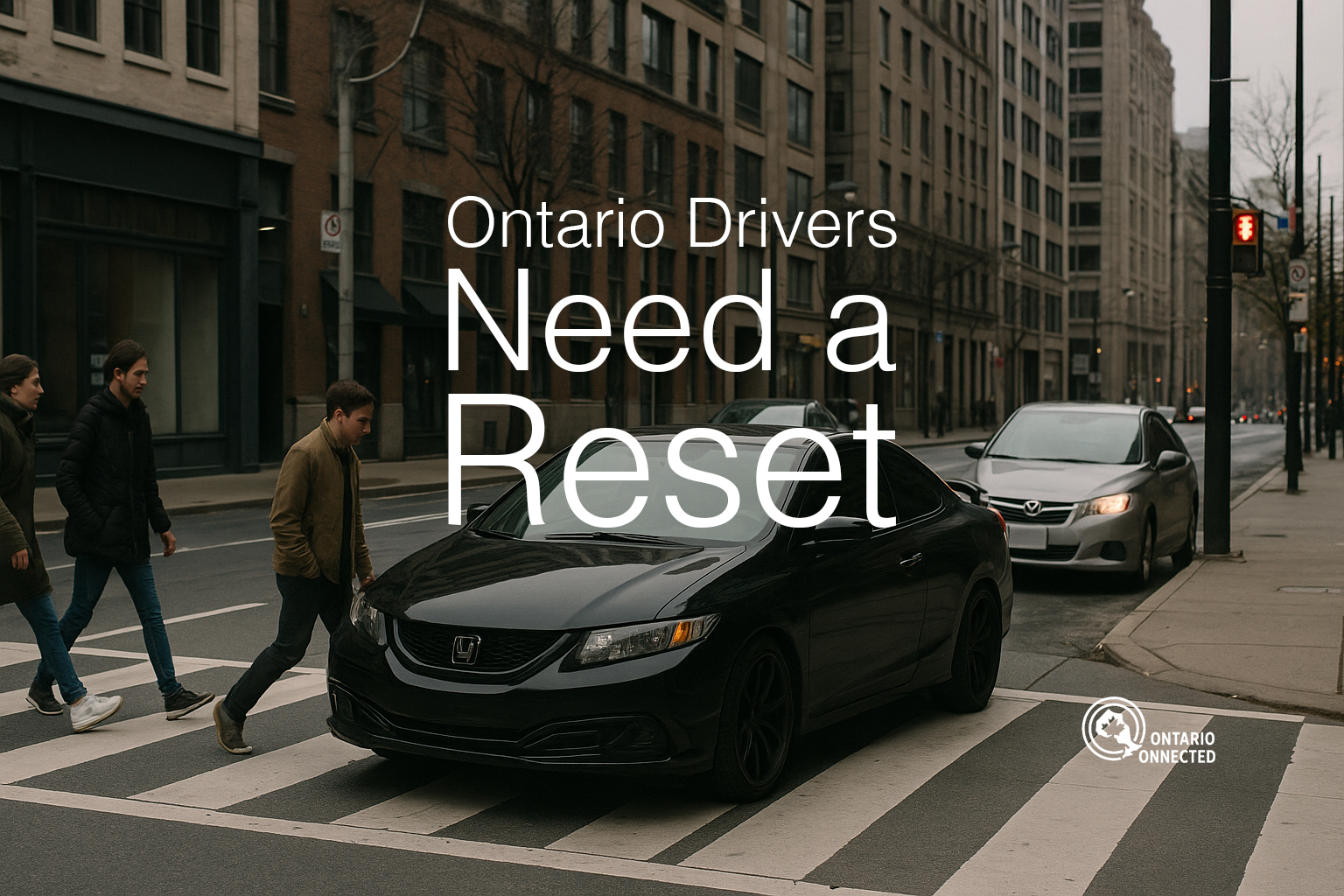
A Highway Incident That Exposes Our Real Problem
Ontario drivers are facing a serious decline in safe driving habits, and a recent incident on the 401 proves just how dangerous our highways have become.
A driver glued himself to the passing lane, refusing to move. Flashing didn’t matter. Courtesy didn’t matter. When I finally found a gap on the right to pass, he swerved across to block me — deliberately.
An OPP cruiser behind us saw everything and pulled him over on the spot.
Good.
But let’s be honest: this behaviour isn’t rare anymore. And we don’t have enough enforcement to keep up with the daily chaos on our highways.
Ontario’s roads are becoming unpredictable, aggressive, and unsafe — not because of the infrastructure, but because of drivers who’ve forgotten (or never learned) how to share the road.
The Dangerous Habits Ontario Drivers Are Normalizing on Our Highways
Ontario drivers are developing increasingly unpredictable and unsafe habits on highways across the province.
You see it every day:
-
left-lane blocking
-
tailgating
-
weaving across lanes
-
rolling through stop lines
-
sitting on pedestrian crossings
-
signalling as you’re already turning
-
cutting people off
-
refusing to let merging drivers in
-
ego-driven driving to “teach people a lesson”
But the worst habit:
Drivers who believe they are allowed to enforce the speed limit on others.
You follow the speed limit.
You follow the law.
But you do not enforce it.
That’s not your job.
People Don’t Understand Intersections Anymore
Many drivers think creeping past the white stop line will trigger the light faster.
It won’t.
Most intersections have sensors before the stop line. Once you cross it:
-
the sensor doesn’t detect your car
-
you block pedestrian crossings
-
you block visibility for turning drivers
-
you create blind spots
-
you interrupt the logic of the intersection
Driving is a shared language — the lines, the signs, the sensors, and the spacing all work together. But that only works if drivers follow them.
Ontario Drivers and the Merging Crisis: What the Law Actually Says
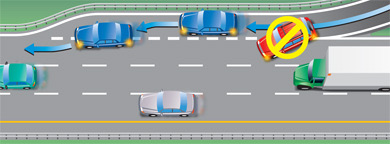
As you leave the ramp you enter the acceleration lane. In the acceleration lane, drivers increase their speed to the speed of traffic on the freeway before they merge with it. Signal and increase your speed to merge smoothly with traffic. Freeway drivers should move over, if it is safe to do so, leaving room for merging vehicles.
Merging onto a highway should be simple. Instead, it’s one of the most dangerous maneuvers in Ontario because people treat it like improvisation.
Here’s what the Highway Traffic Act expects:
1. Ramp Drivers Must Match Highway Speed
Not “try.”
Must.
You accelerate, reach highway speed, and merge smoothly.
Merging at 60 km/h into a 100 km/h flow is reckless and dangerous.
Why matching speed is safe:
-
predictable entry
-
fewer braking waves
-
smoother flow
-
fewer collisions
Why failing is unsafe:
-
rear-end crashes
-
panic merges
-
truck stopping issues
-
sudden swerves
2. Highway Ontario Drivers Must Create Space When Possible
Drivers already on the highway are expected to:
-
maintain speed
-
move left if safe
-
ease off slightly to open a gap
-
cooperate with merging vehicles
This is not a territorial fight. It’s basic courtesy and safety.
3. Stopping at the End of the Ramp Is Dangerous
Unless a sign says STOP or YIELD, stopping is illegal and deadly.
Stopping causes:
-
pileups
-
panic swerves
-
impossible 0→100 km/h launches
-
right-lane instability
If you stopped at the end of the ramp, you already failed the merge.
Illegal Lane Changes: The Silent Highway Killer
Ontario has a serious habit that most people don’t treat seriously: cutting across solid white lines.
A solid line means do not change lanes. Not “when convenient.” Not “just this once.” Not “I signalled, so it’s fine.”
When someone cuts across a solid line:
-
nobody is expecting it
-
visibility is compromised
-
reaction time disappears
-
you enter a lane where the driver is not prepared for you
This is exactly how side-swipes and high-speed collisions happen.
And signalling is NOT permission. It’s not a guarantee that anyone saw you.
The lane-changing driver is 100% responsible for ensuring:
-
the lane is clear
-
the gap exists
-
the signal is shown long enough
-
other drivers have noticed
If they haven’t — the lane change doesn’t happen.
Drivers in the receiving lane should be courteous and help when safe, but it is never their responsibility to fix someone else’s reckless move.
These sudden, illegal lane changes are becoming far too common among Ontario drivers and contribute directly to preventable collisions.
How Ontario Drivers Misuse HOV Lanes and Create Dangerous Situations
The HOV lane is not:
-
a shortcut
-
a “beat the traffic” lane
-
a panic lane
-
a free pass because you’re late
It’s strictly for:
-
vehicles with 2+ occupants
-
eligible EVs
-
buses
-
taxis
-
registered commercial vehicles
Yet every day, drivers:
-
jump across double-solid lines
-
enter the HOV lane at high speed
-
treat it like a hidden express lane
This is illegal, unpredictable, and extremely dangerous.
Why?
-
the double-solid line exists to prevent sudden lane jumps
-
drivers at highway speed are not expecting lateral movement
-
blind-spot zones line up perfectly with the buffer space
-
the speed differential is massive
Crossing into the HOV lane illegally creates the exact type of crash that causes multi-vehicle pileups.
Nobody expects you to do it — and that’s what makes it deadly.
The Dangerous Habits Ontario Drivers Are Normalizing Even Further
Ontario drivers are falling into a pattern of behaviours that are illegal, unsafe, and completely unexpected by other road users — and that unpredictability is exactly what makes them dangerous.
Illegal Lane Changes Across Solid Lines
A solid white line means no lane changes because drivers in that lane are not expecting lateral movement. Cutting across it destroys reaction time and creates instant collision risk.
Signalling does not give permission — the merging driver is always responsible for ensuring safety.
HOV Lane Abuse
Many Ontario drivers treat the HOV lane as a personal express lane, jumping across double-solid lines to bypass traffic. This is one of the most dangerous moves on the highway due to speed differentials and blind-spot zones.
Bottom Line
These behaviours are deadly because they are unexpected. And that is why mandatory, evolving recertification is necessary — to correct habits that drivers now treat as “normal.”
The Root Problem: No Ongoing Education for Ontario Drivers
Ontario gives you a G license for life. After that? Nothing.
Meanwhile:
-
roads evolve
-
traffic increases
-
technology changes
-
driver behaviour worsens
-
new risks emerge
Drivers are using old habits in a completely new environment.
This is why everything feels unpredictable — because drivers haven’t been retrained in decades.
Ontario Driver Recertification Must Evolve With New Problems
If recertification is going to matter, it can’t be a one-time template repeated forever. It must evolve continuously.
Ontario needs a system where:
-
new dangerous trends are identified quickly
-
research happens immediately
-
updated rules are added to the next recertification cycle
-
new habits are corrected before they become normal
This includes monitoring:
-
left-lane aggression
-
HOV lane abuse
-
illegal lane changes
-
merging crash patterns
-
winter collision hot spots
-
distracted driving trends
-
cyclist/pedestrian conflicts
-
new vehicle tech and driver-assist misuse
Recertification should be a living system, updated constantly.
Drivers need guidance that reflects today — not 20 years ago.
The Fix: Mandatory Recertification Every 3–5 Years
This is how Ontario resets its driving culture.
Online Recertification
A short, mandatory online module covering:
-
lane discipline
-
merging rules
-
intersection logic
-
evolving risks
-
cyclist/pedestrian safety
-
winter hazards
-
emergency vehicle rules
-
updated signage
-
new penalties
-
real-time traffic patterns
20–30 minutes. Simple. Modern. Effective.
Rewards for Good Drivers
Recognition and incentives matter:
-
insurance discounts
-
licence renewal reductions
-
digital “Safe Driver” status
-
priority access to upgraded digital services
Penalties for Repeat Offenders
If you break the rules after recertification:
-
more points
-
higher fines
-
in-person retraining
-
temporary licence restrictions
No excuses.
The rules were just refreshed.
Ontario Drivers Need a Reset — Now
Ontario’s driving culture is collapsing into:
-
ego
-
aggression
-
unpredictability
-
illegal shortcuts
-
unsafe habits
We don’t need more arguments or lane wars.
We need education, courtesy, consistency, and cooperation.
Ontario Connected is about real, practical solutions — and mandatory, evolving recertification is one of the most achievable fixes available.
It’s time to bring discipline and safety back to our roads.
For more Road Safety related articles, read the When Seconds Turn Into Tragedy article here
Helpful links:
The Official Ministry of Transportation (MTO) Driver’s Handbook






Leave A Comment
You must be logged in to post a comment.