
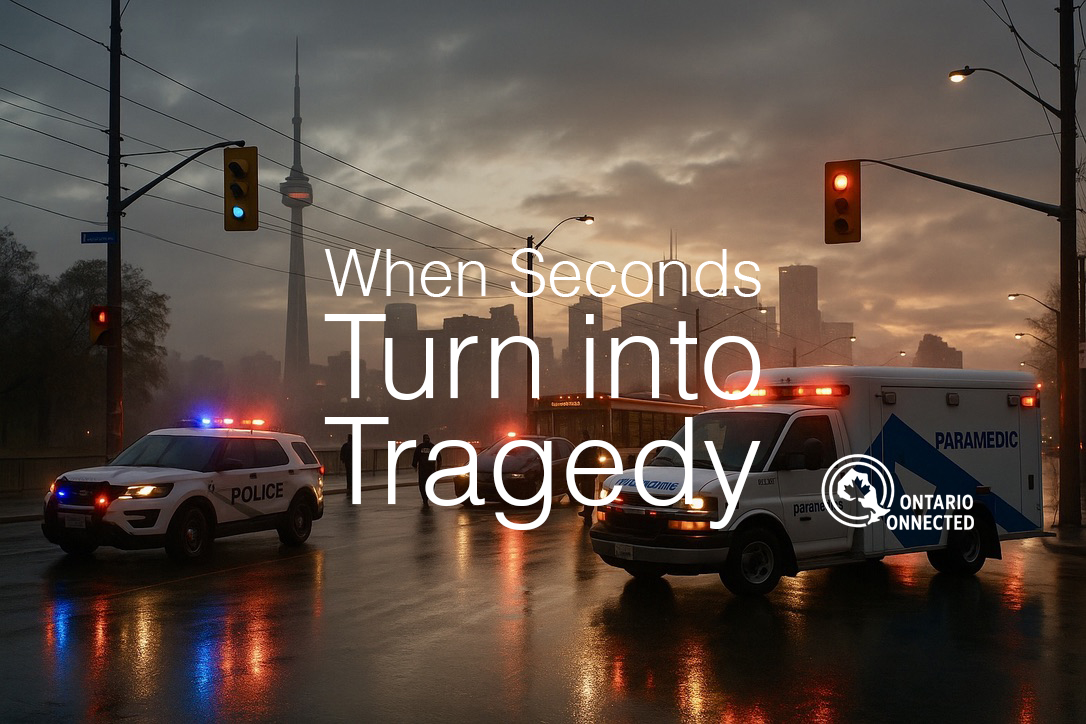
When Seconds Turn Into Tragedy: Rethinking Road Safety in Ontario
Every day across Ontario, lives change in the blink of an eye.
A sudden screech, a flash of lights, and a crash that brings everything to a halt — not only for those involved, but for hundreds stuck behind flashing lights and blocked lanes in an unexpected tragedy.
The Hidden Cost of Every Collision
A car accident isn’t just an entry on a traffic report. Instead, it’s a chain reaction that ripples far beyond the scene.
Police investigations, fire crews, and ambulances rush to respond. As a result, highways close for hours, commuters are delayed, deliveries are disrupted, and tempers rise.
But behind those flashing lights are families waiting for loved ones who may never come home — a heartbreak that no statistic can measure.
Then comes the financial fallout.
When an accident happens, insurance premiums skyrocket, even for careful drivers who’ve never been at fault.
The system, intended to protect, now feels like a penalty. Good drivers end up subsidizing reckless ones because insurers group everyone by postal code rather than by personal record.
That’s not fairness — that’s a formula.
Insurance should reward skill and responsibility, not geography. Ultimately, safe drivers should pay less, not more.
For more on Ontario’s growing affordability gap, read Reclaiming Quality of Life Through Transit.
A Population Outgrowing Its Infrastructure
In just five years, Canada’s population has exploded beyond what its infrastructure can sustain.
Roads, housing, healthcare, and transit weren’t designed for this pace of growth. Therefore, every sector feels the pressure.
The outcome:
- Overcrowded public transit
- Rising housing and grocery costs
- Congested roads and delayed emergency response
- Strained healthcare and public services
In addition, Canada’s compassion is commendable, but compassion without planning breeds crisis.
When population growth outpaces infrastructure, every part of daily life — including road safety — begins to crack.
(Coming soon) See our series on Roadblocks: Why Ontario’s Infrastructure Lags Behind for a deeper look at the issue.
Why Do Accidents Keep Happening?
The reasons are as familiar as they are preventable:
- Distracted driving — phones, food, or simple inattention
- Speeding — shaving off minutes that can cost a lifetime
- Impaired driving — alcohol, drugs, or fatigue
- Rolling stops and sudden lane changes
- Inexperience — drivers behind the wheel before they’re ready
Consequently, our roads have become places where rules are treated as suggestions and courtesy as optional.
The Youth Factor: Are 16-Year-Olds Ready?
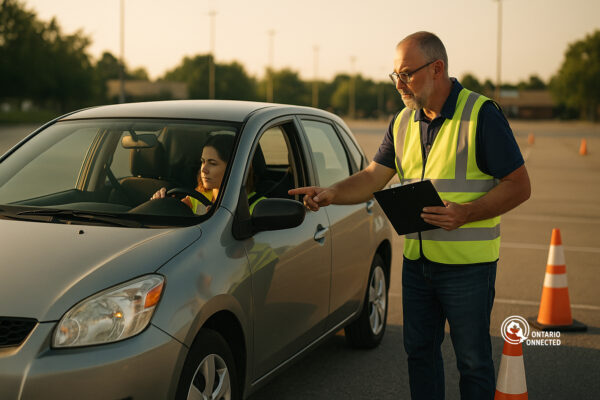
Are 16-Year-Olds Ready?
Ontario allows new drivers to start at sixteen. But is that too young?
At that age, judgment and emotional control are still developing — the very traits driving demands.
Many youth collisions stem from inexperience and overconfidence.
Perhaps it’s time to raise the minimum licensing age to eighteen, when responsibility and awareness are stronger.
Driving isn’t a right. Instead, it’s a privilege that demands maturity.
Truck, Bus, and School-Bus Drivers: The Weight of Responsibility
Ontario’s economy depends on professional drivers — truckers, bus operators, school-bus drivers, and public-transit crews.
Each carries a unique burden: safety multiplied by scale.
A fully loaded transport truck can weigh over 60,000 kg. A school bus carries dozens of children.
One reckless moment can change dozens of lives forever.
Training quality matters.
For more than three decades, Humber College’s Commercial Truck Driving Program set the gold standard for professionalism and safety in Ontario.
Graduates were widely respected and sought after by major carriers for their discipline and reliability.
Sadly, its closure in December 2024 marks the end of a chapter in Ontario’s driver-training history — and it is deeply unfortunate to see such a credible and reputable program shut down at a time when highway safety needs it most.
With Humber’s departure, the gap widens between high-quality instruction and the rise of low-cost “licence-mill” schools, where training is rushed and oversight is minimal.
Some new drivers, including newcomers still learning English or French, are pushed through programs without fully grasping the laws or safety standards they must uphold.
The province must standardize, audit, and enforce all commercial-driver training programs to ensure every operator on the road meets the same professional standard — regardless of where they were trained.
For school-bus and transit operators, the stakes are even higher.
These jobs demand zero tolerance for fatigue, drugs, alcohol, or distraction. Random testing, recertification, and fair compensation must all be part of the equation.
Every passenger seat represents a family’s trust.
Fitness for Duty: The Human Factor
Driving under the influence — of alcohol, drugs, or exhaustion — remains one of the leading causes of preventable death.
The legalization of cannabis and the opioid crisis have made this issue more complex.
Employers must adopt fitness-for-duty programs, and law enforcement must be empowered to check professional and private drivers alike.
Safety over schedule. Life over convenience.
Punishment or Prevention? Rethinking Enforcement
Premier Doug Ford’s decision to cancel Toronto’s speed cameras sparked debate — but he was right about one thing:
automated fines alone don’t fix behaviour.
Speed cameras are a money grab, not a moral solution.
Drivers slow down briefly, then speed back up once they’ve passed. Some even learn where cameras are placed, or worse, vandalize them.
True safety comes from physical and psychological awareness, not fear of a fine.
Speed bumps, raised crosswalks, and better street design force real behaviour change without profit motives.
When roads themselves compel drivers to slow down — especially near schools and playgrounds — everyone wins.
Ontario must shift from a punishment-based system to a reward-based culture:
- Reward safe driving with lower insurance rates
- Recognize perfect records with tax or license-fee discounts
- Encourage recertification with incentives, not penalties
Punishment teaches fear.
Reward teaches responsibility.
Recertification: Learning Never Stops
Once Ontarians earn a full G licence, many drive for decades without refreshing their skills.
Rules evolve. Technology changes. But habits decay.
A mandatory refresher every 3–5 years, combined with incentives for those who pass with excellence, would make a lasting impact.
For seniors, shorter renewal cycles could ensure reflexes stay sharp.
Recertification isn’t about control — it’s about confidence and competence.
For driver resources, visit the Ontario Ministry of Transportation.
Public Transit: A Safer Alternative
Every person who chooses reliable transit removes one car from the road, one insurance claim from the system, and one risk from the gridlock.
Public transit, when expanded and dependable, is the most effective form of road-safety prevention.
Investment in subways, buses, and regional rail isn’t just environmental policy — it’s public-safety policy.
It keeps people moving efficiently, reduces pressure on emergency services, and saves lives.
See Reclaiming Quality of Life Through Transit for how transit connects safety, time, and community well-being.
The Road Ahead

Every Ontarian deserves to arrive safely home.
Ontario stands at a crossroads.
Our population has surged, infrastructure lags, and the systems meant to protect us — insurance, education, enforcement — too often punish instead of prepare.
To build safer roads and stronger communities, we must demand:
- Accountability in licensing and training
- Fairness in insurance
- Realistic infrastructure planning
- Physical traffic-calming over financial penalties
- Reward-based safety incentives
- Investment in public transit
Because road safety isn’t about punishment — it’s about respect, readiness, and responsibility.
And every Ontarian deserves to arrive safely home.





Leave A Comment
You must be logged in to post a comment.