
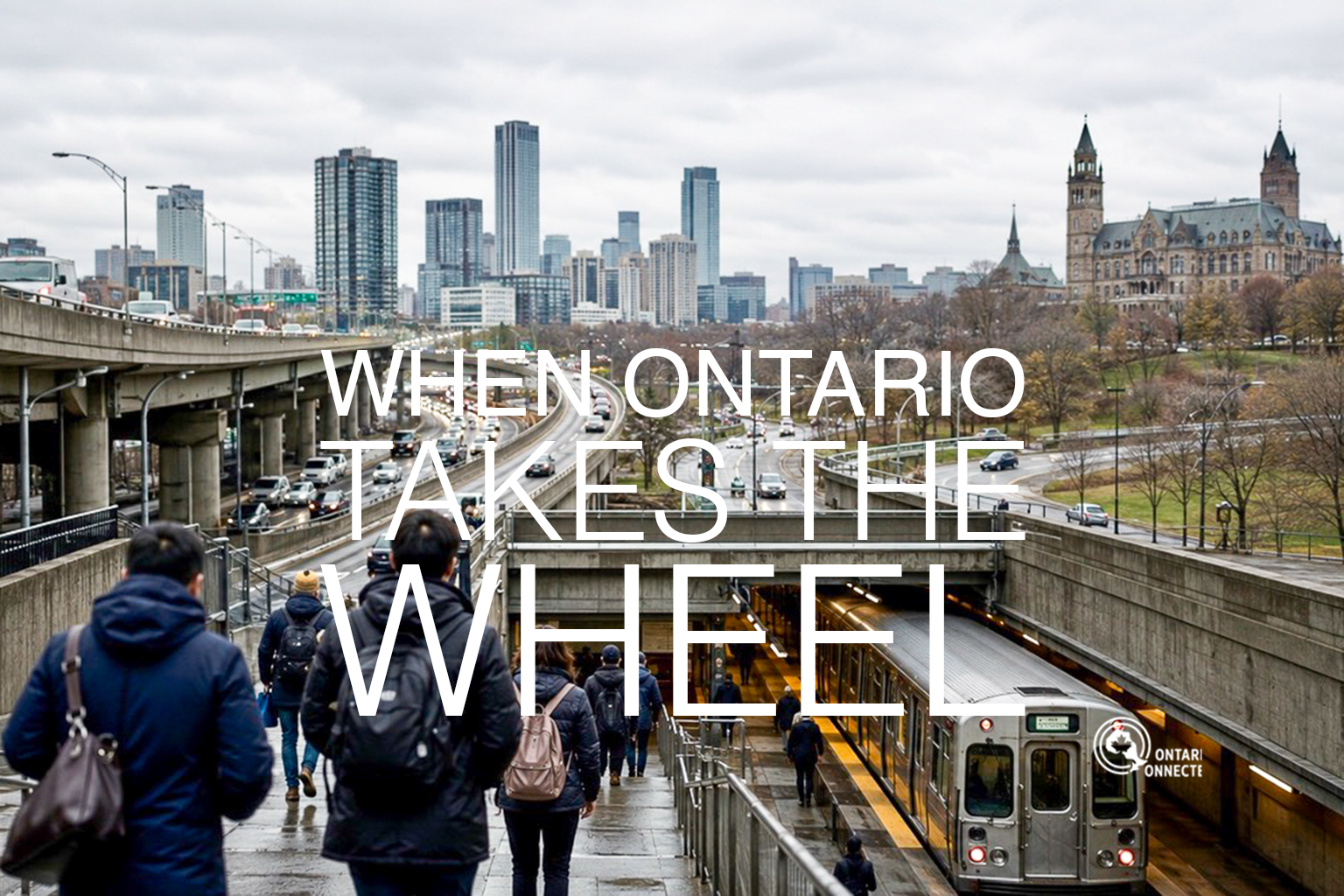
Ontario is applying a clear principle to highways. If a road serves the region, moves goods, supports commuters, and affects the wider economy, then it should not be treated as a local burden alone.
That same principle should apply to public transit.
If the DVP and Gardiner are regional infrastructure, then the TTC subway is regional infrastructure too. So are GO Transit, local bus systems, future rapid transit corridors, and the stations that connect them.
Ontario cannot centralize transportation control while leaving cities to carry the cost of safety, service, and long-term operations on their own.
Key takeaway: If transportation infrastructure serves Ontario, Ontario must help fund it properly.
The Highway Upload Changes the Conversation
The Province is moving ahead with uploading ownership and maintenance of the Gardiner Expressway and Don Valley Parkway in fall 2027. The argument is simple: these highways are not just Toronto roads. They move people and goods across the Greater Toronto Area and support the wider provincial economy.
That argument is not wrong.
The Gardiner and DVP are used by people from across the region. They support commuters, deliveries, emergency access, business travel, tourism, and major events. Their condition affects more than one municipality.
But that same logic cannot stop at highways.
The subway also serves the region. Every day, people from York, Peel, Durham, Halton, and beyond rely on Toronto’s subway network to reach work, school, hospitals, appointments, events, and connecting transit services.
The TTC may be owned by Toronto, but its role is much larger than Toronto.
This is exactly why Ontario Connected has argued that infrastructure planning needs to move beyond isolated projects and start treating the province as one connected system. The same logic behind regional roads should apply to regional transit, regional housing, regional healthcare access, and regional labour movement.
Key takeaway: If regional highways deserve provincial responsibility, regional transit deserves provincial responsibility too.
Bill 98 Makes the Issue Even Clearer
Bill 98 has changed the transit conversation in Ontario. Through the Fare Alignment and Seamless Transit Act, 2026, the Province has created a framework for more provincial authority over fare integration, transfer rules, service standards, regional coordination, and related transit matters.
In plain language, Ontario wants a greater role in how transit systems connect.
There is nothing wrong with wanting transit systems to work better together. Riders should not have to fight through disconnected fare systems, weak transfers, poor coordination, and service gaps between municipalities.
Ontario needs seamless transit.
But seamless transit cannot mean provincial control without provincial responsibility.
If the Province is going to shape how fares work, how routes connect, how service standards are set, and how regional travel is coordinated, then the Province must also take greater responsibility for funding the system properly.
That means operating funding.
It means capital funding.
It means station safety funding.
It means long-term maintenance funding.
It means protecting public service from being weakened by cost-cutting models.
Ontario Connected has already raised this concern in TTC Privatization and Bill 98: What Comes Next. The issue is not whether transit should be better connected. The issue is whether the Province will use integration to strengthen public transit or to centralize control while leaving cities, riders, and workers to absorb the consequences.
Key takeaway: Bill 98 should not become a tool for control without investment.
The Platform Door Question Shows the Funding Gap
The debate over platform barriers and platform doors shows the problem clearly.
Platform edge doors provide a higher level of protection, but they are expensive. Retrofitting older subway stations is complex. It can require structural changes, utility relocation, platform work, signal coordination, train alignment, ventilation reviews, and construction planning at active stations.
That is exactly why this cannot be left as a TTC-only problem.
Track intrusions do not only affect one station. They affect the entire line. They affect riders, workers, schedules, service reliability, emergency response, and public confidence in the system.
When the subway stops, Ontario does not move.
So when governments say platform doors are too expensive, the real question is: too expensive for whom?
Too expensive for Toronto alone? Probably.
Too expensive for a province that says the subway is part of a regional transportation network? That is a different question.
If the Province can take responsibility for highways because they are regionally important, then it can help fund real subway safety because the subway is regionally important too.
Toronto’s subway is not a neighbourhood service. It is the backbone of the region’s transit network. It connects to GO Transit, regional bus services, universities, hospitals, employment centres, tourist destinations, government buildings, and major events.
That makes platform safety a regional issue.
Key takeaway: Platform safety is regional infrastructure, not just a local TTC expense.
Highways Get Uploaded. Transit Gets Controlled.
This is the imbalance Ontario needs to address.
With highways, the Province is accepting ownership and maintenance responsibility.
With transit, the Province is expanding authority through legislation.
Those two things should be connected.
If Ontario uploads roads, it should also help upload the burden of transit safety and transit operations. If Ontario wants seamless fares, it should fund the service needed to make those fares meaningful. If Ontario wants regional planning, it should not leave cities fighting over shortfalls.
Otherwise, the pattern becomes obvious.
Highways get provincial relief.
Transit gets provincial rules.
That is not a balanced transportation policy.
The Province cannot treat the DVP and Gardiner as Ontario assets while treating the subway as Toronto’s financial problem. The subway carries people who live far beyond Toronto’s borders. It supports the same economy, the same workforce, and the same regional mobility goals.
Key takeaway: Provincial control must come with provincial funding.
What Ontario Connected Should Stand For
Ontario Connected is built around a simple idea: infrastructure should connect people, not just projects.
That means roads, transit, housing, healthcare, labour, climate resilience, and regional planning cannot be treated as separate files.
The DVP and Gardiner upload proves that Ontario already understands regional infrastructure when it comes to highways. Bill 98 proves that Ontario wants a larger role in regional transit.
Now the Province has to connect those two ideas properly.
A connected Ontario cannot be built by uploading highways while underfunding transit.
A connected Ontario cannot be built by controlling fares while ignoring service costs.
A connected Ontario cannot be built by announcing integration without funding the safety systems that make transit reliable.
Ontario Connected has consistently argued for a deeper, smarter, and more integrated transportation future. That includes stronger regional transit corridors, better connections between cities, more complete transit hubs, and infrastructure that supports housing, healthcare, employment, and mobility together.
That vision requires a full transportation compact:
- Provincial funding for regionally important transit systems.
- Long-term capital funding for subway safety, including platform edge doors where technically feasible.
- Stable operating support tied to service reliability.
- Transparent rules for fare integration.
- Clear protection against service cuts caused by revenue loss.
- Public accountability when provincial decisions affect local systems.
- Infrastructure planning that treats transit as seriously as highways.
This is not about choosing roads or transit.
It is about applying the same standard to both.
Key takeaway: Ontario needs one infrastructure standard, not one standard for highways and another for transit.
The Real Test of Bill 98
The real test of Bill 98 will not be whether the Province can design a cleaner fare map.
The test will be whether riders actually get better service.
Do buses arrive more often?
Do subway delays go down?
Do fares stay affordable?
Do municipalities avoid losing revenue?
Do workers have the staffing and safety tools needed to operate the system properly?
Do stations become safer?
Do people in the 905, Hamilton, Durham, Peel, York, Halton, and Toronto experience transit as one connected public service?
If the answer is yes, then integration will mean something.
If the answer is no, then Bill 98 will become another example of Queen’s Park taking control without taking responsibility.
Ontario does not need another layer of transportation control. It needs transportation responsibility.
Key takeaway: Seamless transit must be measured by service, safety, affordability, and accountability.
What the Province Should Do Next
Ontario should use the DVP and Gardiner upload as the beginning of a broader regional infrastructure policy.
First, the Province should recognize the TTC subway as regional infrastructure, not just a Toronto asset.
Second, Ontario should create a dedicated provincial funding stream for subway safety upgrades, including platform edge doors at the busiest and highest-risk stations.
Third, Bill 98 regulations should include protections so fare integration does not create municipal revenue losses that lead to service cuts.
Fourth, provincial transit planning should include long-term operating support, not just capital announcements.
Fifth, Ontario should publish a clear framework explaining when infrastructure is considered local, regional, or provincial.
That framework matters because Ontario cannot keep making these decisions one project at a time.
If the Gardiner and DVP are regional because they move people across municipal boundaries, then many transit systems meet that same test.
The Province has already recognized the need for seamless transit. Now it needs to recognize the cost of making seamless transit safe, reliable, and fair.
Key takeaway: Ontario needs a clear rule for regional infrastructure, and transit must be included.
A Connected Ontario Needs Connected Responsibility
The phrase “seamless transit” sounds simple. In reality, it requires money, coordination, staffing, maintenance, technology, safety upgrades, and long-term accountability.
Fare integration is not enough.
A rider does not only need one fare card. A rider needs a bus that arrives, a subway that runs, a station that feels safe, a transfer that works, and a system that is properly staffed and maintained.
That is why provincial transit funding matters.
Without funding, integration becomes branding.
With funding, integration becomes real service.
Ontario Connected’s broader vision is not just about moving people faster. It is about building a province where infrastructure decisions are connected to daily life. A person’s commute, rent, job access, healthcare access, family time, and quality of life are all shaped by the transportation system around them.
That system cannot be fixed by controlling fares alone.
It has to be funded properly.
Key takeaway: Real integration requires real investment.
Final Thought
The Province is right about one thing: some infrastructure is too important to be left to one municipality alone.
That is true for the DVP.
It is true for the Gardiner.
It is also true for the subway.
Bill 98 gives Ontario a larger role in transit. The highway upload gives Ontario a larger role in regional road infrastructure. The next step should be obvious.
Provincial transit funding must follow provincial control.
If Ontario wants seamless transit, it must fund the safety, service, and infrastructure needed to make seamless transit real.
If Ontario wants to upload highways because they serve the region, then it must also support transit systems that serve the region.
A connected Ontario cannot be built with disconnected responsibility.
Ontario should not just upload highways.
Ontario should upload its responsibility for the transit systems that keep the province moving.
Sources and Further Reading
- Ontario Newsroom: Ontario to Take Ownership of Gardiner Expressway and Don Valley Parkway in Fall 2027
- Legislative Assembly of Ontario: Bill 98, Building Homes and Improving Transportation Infrastructure Act, 2026
- TTC Board Report: Platform Edge Doors Study
- City of Toronto: Don Valley Parkway
- Ontario Connected: TTC Privatization and Bill 98: What Comes Next
- Ontario Connected: Transit as a Lifeline for Ontario Seniors
- Ontario Connected: How Transit Hubs Can Help Solve Homelessness




Leave A Comment
You must be logged in to post a comment.